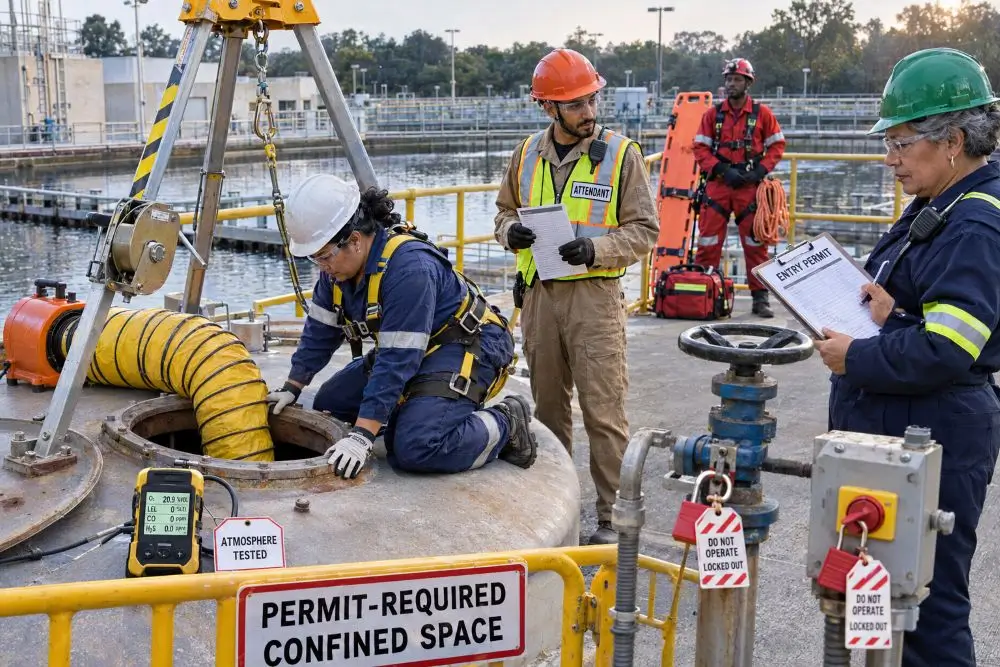
Confined spaces can create serious workplace hazards because they may have limited access, poor ventilation, hazardous atmospheres, or other conditions that can make work and emergency response more difficult. Workers who enter these spaces may face risks that are not present in typical work areas, making proper hazard assessment and safety procedures essential.
OSHA defines a confined space based on specific characteristics related to its size, entry and exit points, and intended use. Understanding what qualifies as a confined space, as well as the difference between a confined space and a permit-required confined space, helps employers and workers determine what safety measures and procedures may be necessary.
What Is a Confined Space According to OSHA?
According to OSHA, a confined space is an area that is large enough for an employee to enter and perform assigned work, has limited or restricted means of entry or exit, and is not designed for continuous employee occupancy. These characteristics can apply to many workplace areas, including tanks, silos, pits, and other enclosed spaces.
For a space to meet OSHA's definition of a confined space, it must have all three characteristics:
- Large enough for an employee to enter: The space must be sufficiently large for an employee to enter and perform work.
- Limited or restricted means of entry or exit: The space does not have a normal, unrestricted way for employees to enter or leave.
- Not designed for continuous employee occupancy: The space is not intended to be regularly occupied by employees as a normal work area.
What Is a Permit-Required Confined Space?
A permit-required confined space is a confined space that contains, or has the potential to contain, serious hazards requiring additional precautions before and during entry. These hazards may include a hazardous atmosphere, materials that could engulf or trap an employee, or other conditions that could create a serious safety or health risk. Employers must follow specific procedures when workers enter permit-required confined spaces.
Confined spaces can be found in many different workplaces and industries. Common examples include tanks, silos, storage bins, manholes, sewers, pits, tunnels, and vessels. Although these spaces can vary greatly in size and purpose, they may meet OSHA's confined space criteria when they have limited entry or exit and are not designed for continuous employee occupancy.
Common Confined Space Hazards
Confined spaces can expose workers to hazards that may be difficult to recognize before entry. Hazardous atmospheres, low or excessive oxygen levels, and toxic or flammable gases can create serious risks. Other hazards may include engulfment, entrapment, falls, and contact with moving equipment or machinery.
Environmental conditions can also make confined space work more dangerous. Extreme heat, poor ventilation, limited visibility, and other conditions may affect workers during entry and make it harder to respond to an emergency. Identifying these hazards before work begins and maintaining appropriate controls throughout the entry can help reduce the risks.
Confined Space vs. Permit-Required Confined Space
A confined space meets OSHA's three basic criteria: it is large enough for an employee to enter, has limited or restricted entry or exit, and is not designed for continuous employee occupancy. A permit-required confined space meets these criteria and also contains, or has the potential to contain, additional serious hazards such as a hazardous atmosphere, engulfment hazard, or other recognized safety or health hazard.
The distinction is important because permit-required spaces require additional controls and procedures before employees can enter. Employers must evaluate confined spaces to determine whether permit-required conditions exist and, where applicable, establish a permit space program that addresses entry procedures, hazard controls, atmospheric testing, and emergency arrangements.
What Is Confined Space Entry?
OSHA considers an employee to have entered a confined space when any part of the employee's body breaks the plane of an opening into the space. This means entry can occur even when a worker does not completely enter the confined space.
Once entry takes place, additional safety responsibilities and precautions may apply, depending on the type of space and hazards present. Employers may need to conduct atmospheric testing, establish communication procedures, provide appropriate equipment, and follow specific entry procedures before and during the work.
OSHA Confined Space Entry Requirements
Safe confined space entry requires employers to identify potential hazards and establish appropriate procedures before workers enter the space. Depending on the type of confined space and the hazards involved, OSHA requirements may include the following:
Hazard Evaluation: Identify and evaluate hazards associated with the space and the work being performed.
Atmospheric Testing: Test the atmosphere for oxygen levels and hazardous or potentially hazardous gases and vapors before and, when necessary, during entry.
Ventilation: Use appropriate ventilation to control or remove hazardous atmospheric conditions when needed.
Isolation of Hazards: Isolate energy sources, equipment, lines, or other hazards that could endanger workers during entry.
Personal Protective Equipment: Provide and use appropriate PPE based on the hazards identified during the evaluation.
Communication: Establish reliable communication between workers inside the space and personnel outside it.
Entry Permits Where Required: Complete and follow the required permit procedures before entering a permit-required confined space.
Attendant and Entry Supervisor Roles: Assign qualified personnel to perform required attendant and entry supervisor duties and ensure entry procedures are properly followed.
Roles and Responsibilities in Confined Space Work
Safe confined space work depends on clearly defined roles and responsibilities before and during entry. Authorized entrants, attendants, and entry supervisors each have specific duties that help control hazards and support a safe entry operation.
Authorized Entrant
An authorized entrant is an employee who is permitted to enter a confined space. They must follow entry procedures, use required safety equipment, monitor for hazards, and communicate with the attendant as required.
Attendant
An attendant remains outside the confined space and monitors the authorized entrants throughout the entry operation. They maintain communication, watch for changing conditions, and take appropriate action if an emergency occurs.
Entry Supervisor
The entry supervisor oversees the confined space entry operation and ensures required procedures and controls are in place. They verify that entry conditions are acceptable and that the entry operation follows the established permit requirements.
Conclusion
Safe confined space work depends on clearly defined roles and responsibilities before and during entry. Authorized entrants, attendants, and entry supervisors each have specific duties that help control hazards and support a safe entry operation.