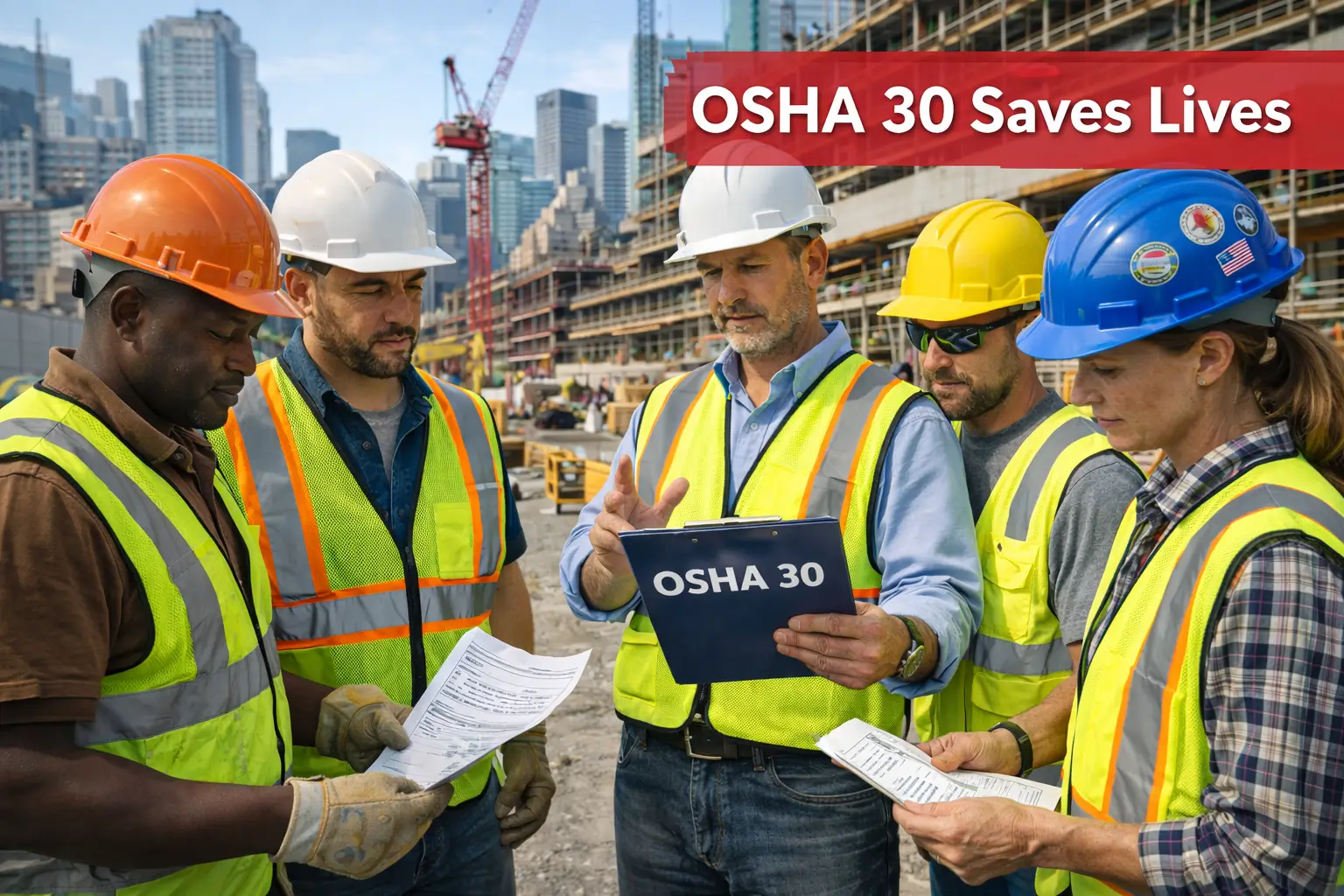
Construction sites remain among the most high-risk work environments in the United States, with workers facing daily exposure to serious hazards such as falls, electrical risks, and heavy equipment.
OSHA 30-Hour Construction training is designed to provide in-depth safety knowledge for workers, supervisors, and site leaders operating in these environments. Unlike brief safety briefings, this training offers a structured understanding of hazard recognition, injury prevention, and worker responsibilities.
For construction professionals, OSHA 30 training supports safer job performance, stronger risk awareness, and better adherence to workplace safety expectations. It also plays an important role in meeting employer and project safety requirements across the industry.
What Is OSHA 30-Hour Construction Training?
OSHA 30-Hour Construction Training is an extended safety education program designed to provide in-depth knowledge of workplace hazards in the construction industry. It is intended for workers, supervisors, foremen, and site leaders who have safety responsibilities on jobsites.
The training focuses on hazard recognition, worker rights, employer responsibilities, and safe work practices aligned with OSHA standards. Compared to OSHA 10-Hour training, the 30-hour version covers topics in greater depth and addresses supervisory-level safety awareness. This training helps participants better understand how to identify, reduce, and manage construction-related risks. Here’s how:
Improved Jobsite Safety Awareness
OSHA 30-Hour training provides a deeper understanding of common construction hazards encountered on active job sites. A major focus is placed on OSHA’s “Fatal Four” hazards—falls, struck-by incidents, electrocution, and caught-in-between risks, which account for most construction-related fatalities.
Workers gain the ability to recognize hazards before tasks begin rather than reacting after incidents occur. This increased awareness supports safer decision-making during daily operations and helps reduce preventable injuries on construction sites.
Reduced Injury and Incident Risk
OSHA 30-Hour construction training provides workers with a deeper understanding of job-site hazards and proven risk-control practices. This advanced safety knowledge helps workers recognize unsafe conditions before they lead to injuries or property damage.
Trained workers are more likely to follow safe work practices, use protective equipment correctly, and speak up when hazards are present. Over time, this proactive approach contributes to fewer incidents and safer construction projects overall.
Career Advancement Opportunities
Many construction employers view OSHA 30-Hour training as a strong indicator of safety awareness and leadership readiness. Workers with this training are often considered for supervisory, foreman, or safety-lead roles on jobsites.
It also provides a competitive advantage when applying to large contractors or multi-employer projects where advanced safety training is preferred. In the long term, OSHA 30-Hour training can support greater job stability and career growth within the construction industry.
Employer & Project Requirements
Construction employers increasingly require OSHA 30-Hour trained workers to meet project safety expectations and internal safety standards. The training helps align workers with site-specific rules set by owners, general contractors, and safety managers.
On government and large-scale construction projects, OSHA 30-Hour training is often expected for supervisory personnel. Having trained workers on site supports stronger safety coordination and smoother project execution.
Stronger Understanding of Worker Rights & Responsibilities
OSHA 30-Hour training helps construction workers understand their rights related to workplace safety and hazard reporting. It also explains employer responsibilities for maintaining safe job conditions.
Workers learn how to properly use reporting channels for hazards, near-misses, and unsafe practices. This knowledge encourages active participation in safety systems rather than passive reliance on supervision alone.
Improved Safety Culture on Jobsites
Workers with OSHA 30-Hour training often influence safer behaviors across their teams. Their knowledge supports more effective toolbox talks and daily safety discussions. By reinforcing accountability and peer-to-peer awareness, trained workers help normalize safe work practices. This strengthens a job site culture focused on prevention rather than reacting after incidents occur.
Long-Term Value for Construction Professionals
The safety principles learned through OSHA 30-Hour training are transferable across different job roles, employers, and construction environments. As tools, materials, and methods evolve, foundational safety knowledge remains relevant.
Fewer injuries also mean reduced downtime and more consistent work opportunities. Over the long term, continued safety education supports professional growth and sustained career stability in construction.
Meeting Industry Expectations and Regulatory Adherence
OSHA 30-Hour construction training helps workers and employers align with widely accepted safety expectations across the construction industry. Many owners, general contractors, and project managers view OSHA 30 training as a baseline indicator of advanced safety awareness on complex job sites.
Completing the training demonstrates a strong commitment to hazard recognition, safe work practices, and responsible jobsite behavior. This level of preparation supports smoother project approvals, fewer safety-related disruptions, and stronger trust between workers, contractors, and project stakeholders.
Conclusion
OSHA 30-Hour construction training delivers long-term value beyond basic safety instruction. It equips construction workers with deeper hazard awareness, stronger decision-making skills, and a clear understanding of workplace rights and responsibilities.
From reducing injury risks to supporting career growth and reinforcing positive safety culture, the training plays a vital role across all levels of construction work. For professionals seeking safer job sites, better opportunities, and lasting industry relevance, OSHA 30-Hour training is a practical investment in both safety and career development.